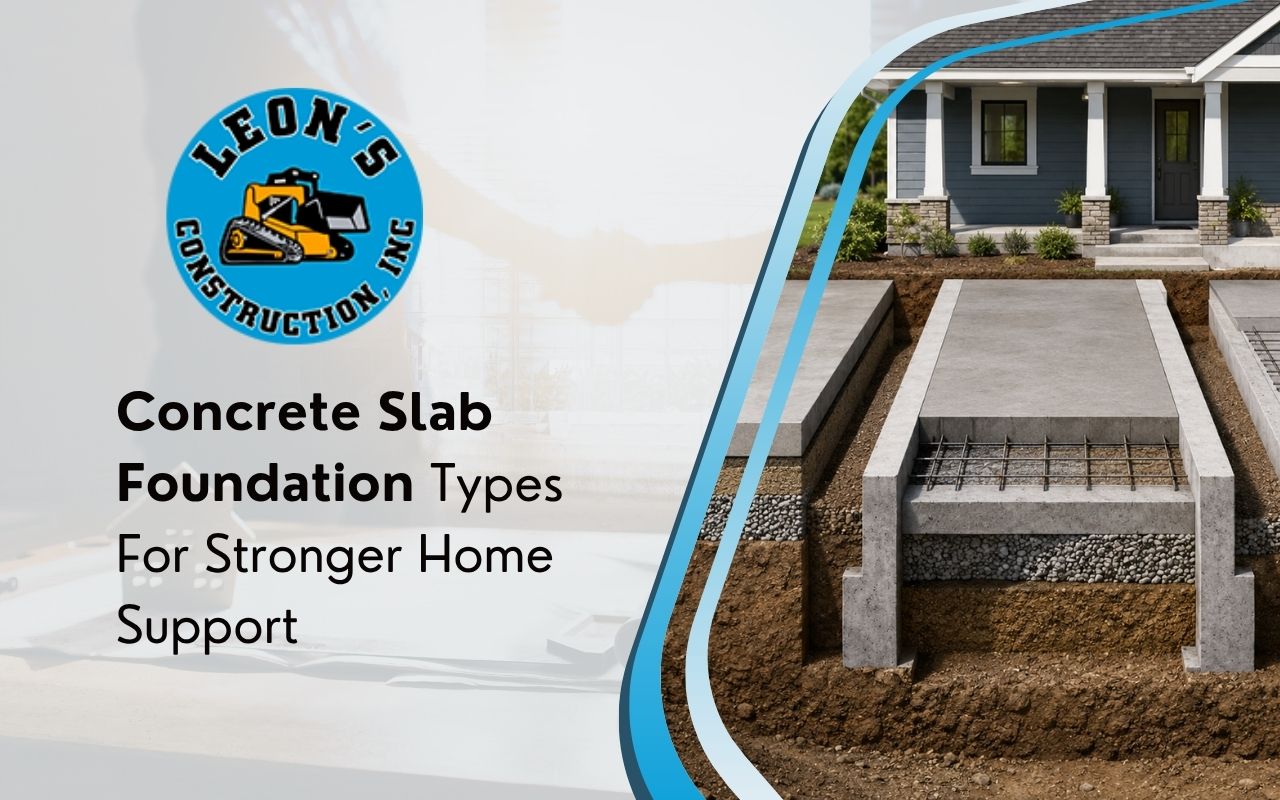
Concrete Slab Foundation Types For Stronger Home Support
Concrete slab foundation types give a home the steady base it needs to stay safe, dry, and strong. At Leon's Construction Inc, we understand how the right slab can help protect floors, walls, and living spaces from soil movement and water problems.
However, not every slab works the same way. Soil, weather, home size, and long-term use all matter. That is why choosing the right base can make a real difference before any building work begins.
Solid Foundation Choices Start With The Right Slab
Every home needs a base that matches the land below it. Concrete slab foundation types can support different needs, from simple homes on stable soil to larger builds that need added strength.
For many homeowners, the best choice starts with a clear look at the site. Our team checks drainage, soil condition, and project goals before guiding the next step. You can review our broader work through our concrete and construction services.
Monolithic Slabs Give Homes Simple Lasting Support
A monolithic slab design uses one concrete pour for the floor and footing. Because both parts are formed together, the surface has fewer weak points and can be completed with a smoother process.
This option often works well for stable ground and mild weather. It also helps spread weight evenly, which may reduce settling. In many residential concrete foundations, this design offers a strong balance of value, speed, and long-term use.
Creates the slab and footing at the same time
Reduces seams where water may enter
Works well for many single-family home projects
Floating Slab Systems Help Manage Moving Soil
Floating slab systems sit over prepared soil and spread weight across a wide area. Instead of going deep into the ground, the slab moves more naturally with small soil changes.
This approach can be useful where moisture makes soil expand or shrink. With the right gravel layer, steel support, and moisture barrier, the slab can handle movement while protecting the home above.
Spreads home weight over a wider surface
Helps reduce stress from changing soil
Supports garages, sheds, and some home projects
Slab Base Support Protects Homes From Damage
Good slab base support starts before the concrete is poured. The soil should be compacted, level, and ready to carry the home. Gravel and moisture barriers also help keep water from weakening the base.
At Leon's Construction Inc, we focus on preparation because a slab is only as strong as the ground under it. For local slab work, homeowners can learn more about our Lumberton concrete slab services.
Special Slab Options Fit Climate And Strength Needs
Some concrete slab foundation types are made for special conditions. Frost-protected slabs use insulation to help stop freezing soil from lifting the concrete. Insulated slabs can also make floors feel more comfortable in colder months.
Post-tensioned slabs use steel cables inside the concrete for added strength. Tilt-up slab work can also speed up larger builds by joining wall and floor planning. Each option should match the land, weather, and building size.
Frost-protected slabs help in colder regions
Insulated slabs can support better comfort
Post-tensioned slabs add strength for difficult soils
Residential Concrete Foundations Need Care Over Time
Residential concrete foundations last longer when water is kept away from the slab edges. Gutters, proper grading, and clear drainage paths help protect the soil under the concrete.
Small cracks can happen over time, but they should still be watched. Larger cracks, uneven floors, or water near the slab may point to a deeper issue. For nearby projects, our Fayetteville slab services can help guide the next step.
Frequently Asked Questions
Which slab type is best for most homes?
The best choice depends on soil, drainage, weather, and home design. A monolithic slab design often works well on stable ground, while other systems may suit moving soil or colder areas.
Do slab foundations need regular maintenance?
Yes, simple care helps protect the slab. Keep water away, watch for cracks, and check for soil gaps around the home. These steps can reduce future repair needs.
Can floating slabs work for houses?
Floating slabs can work for some homes and smaller buildings when designed correctly. They are often helpful where the soil moves with moisture changes.
Why does drainage matter so much?
Water can soften soil under the slab and cause movement. Good drainage keeps the base more stable and helps the concrete perform better over time.
Should a contractor inspect the soil first?
Yes, soil checks help guide the right slab choice. This step can prevent weak support, poor drainage, and future damage.
Plan Your Concrete Foundation With Trusted Guidance
Concrete slab foundation types should be chosen with care because the slab supports everything above it. At Leon's Construction Inc, we help homeowners think through soil, weather, drainage, and long-term use before work begins.
As a result, the final slab can better support the home for years. To discuss your project, reach our team through our contact page and share the details of your foundation needs.