
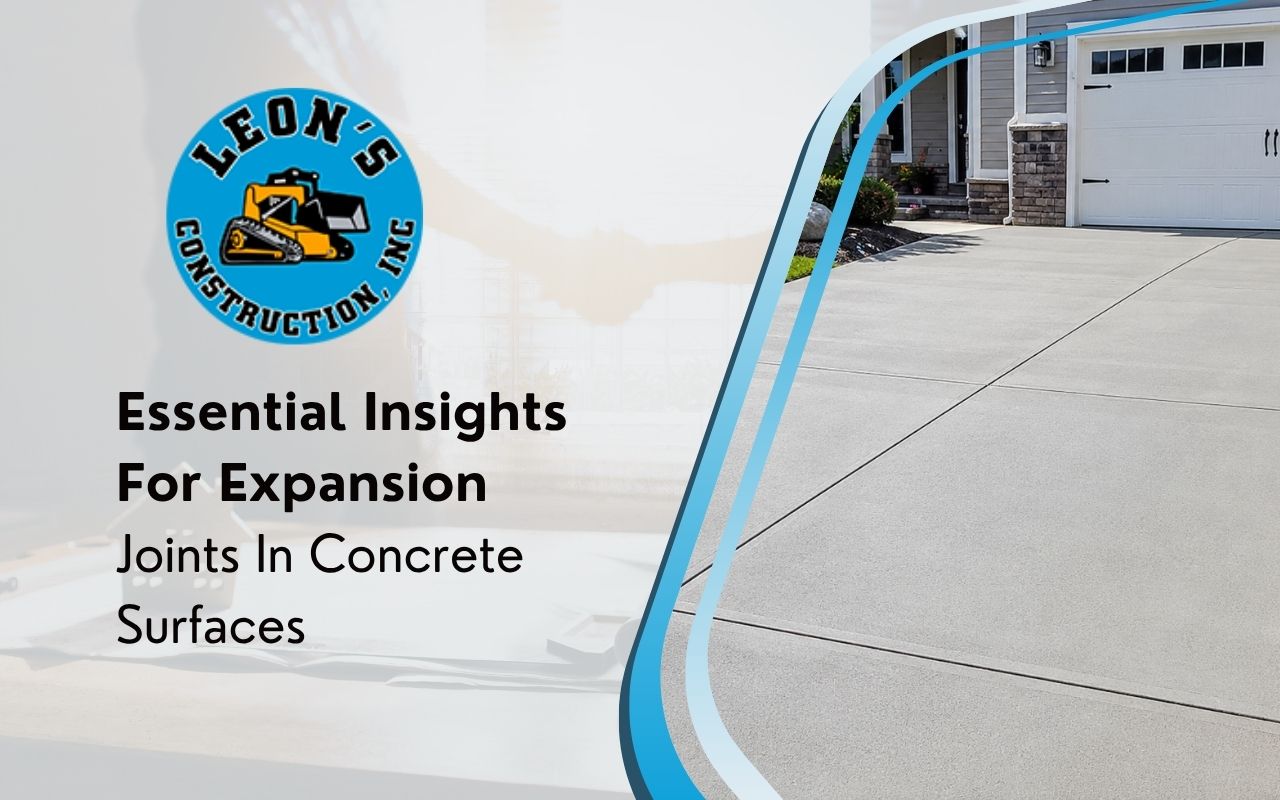
Essential Insights For Expansion Joints In Concrete Surfaces
Expansion joints in concrete surfaces help slabs move without random cracking, unsafe edges, or early damage. As concrete warms, cools, dries, and carries weight, it needs planned space to shift safely.
At Leon's Construction Inc, we plan concrete work with durability in mind from the start. Therefore, this guide explains crack control spacing, joint planning, material choices, and simple care steps for stronger driveways, sidewalks, patios, and flatwork.
Concrete Joints Matter For Long-Lasting Flatwork
Concrete may look solid, yet it still moves with heat, moisture, soil changes, and daily use. Expansion joints in concrete surfaces act as planned gaps that reduce pressure before cracks spread across the slab.
Good joints also help prevent raised edges and uneven areas. As a result, the surface stays safer, cleaner, and easier to maintain for homeowners, builders, and property managers.
Smart Crack Control Spacing For Cleaner Concrete Results
Crack control spacing means choosing the right distance between joints. When spacing is planned well, small stress points happen where they belong instead of breaking the slab in random places.
Use closer spacing for thinner slabs or areas with more movement.
Plan joints before the concrete is poured, not after problems appear.
Adjust spacing when soil, heat, or heavy use may affect the slab.
A Practical Joint Placement Guide For Stronger Slabs
A joint placement guide helps each slab section move in a controlled way. For many projects, spacing is often based on slab thickness, surface size, corners, edges, and expected daily use.
For better planning, our team also checks the shape of the area and nearby structures. You can review our concrete work through our construction service options before planning your project.
Place joints around fixed objects, such as posts or walls.
Keep slab sections as even and simple as possible.
Avoid long, narrow sections that are more likely to crack.
Materials That Support Reliable Concrete Movement Protection Outdoors
Concrete movement protection depends on the right filler and sealant. Common options include foam, rubber, fiberboard, neoprene, and flexible sealants that help keep water, dirt, and pressure under control.
Each material has a different purpose. For example, some fillers compress easily, while others resist weather and water better. Therefore, the right choice depends on the slab location, use, and exposure.
Foam can work well for simple residential flatwork.
Rubber and neoprene suit tougher outdoor conditions.
Flexible sealants help reduce water entering the joint.
Installation Steps That Help Joints Perform Correctly Longer
Correct installation starts with clean lines and the right depth. A joint is often cut or formed to about one-quarter of the slab thickness, so stress can release where planned.
We also focus on neat finishing because poorly placed joints can create trip risks. For driveway planning examples, visit our Lumberton concrete driveway page for related residential service details.
Maintenance Habits That Protect Concrete Surfaces Over Time
Expansion joints in concrete surfaces need simple care to keep working well. Dirt, weeds, old sealant, and standing water can block movement and lead to early damage.
Regular checks are part of surface durability planning. Clean the joints, remove plant growth, and replace worn filler when needed. These steps help reduce repairs and keep the surface stable longer.
Frequently Asked Questions
Why are expansion joints needed in concrete?
Expansion joints in concrete surfaces give slabs room to move as temperatures and moisture change. Without them, pressure can build until cracks appear in weak or unwanted areas.
How far apart should concrete joints be placed?
Spacing depends on slab thickness, use, soil, and weather. A common guide is spacing in feet at about two times the slab thickness in inches, but each project should be reviewed carefully.
Can expansion joints stop every concrete crack?
No joint can stop every crack, but good spacing controls where cracking is most likely to happen. This keeps the surface cleaner, safer, and easier to repair.
What happens when joints are not maintained?
Old or blocked joints may let water, dirt, and roots enter the slab area. Over time, this can cause uneven movement, wider cracks, and more costly repairs.
Who can help plan concrete joints correctly?
Our team can help homeowners plan practical joint locations for strong flatwork. You may also read our customer experiences to learn how our work supports lasting results.
Better Surface Durability Planning For Your Next Project
Surface durability planning should happen before the first pour. With the right joint layout, material choice, and maintenance plan, expansion joints in concrete surfaces can protect driveways, patios, walkways, and large slabs.
At Leon's Construction Inc, we assist with clear guidance and careful concrete work. For service in nearby areas, see our Fayetteville driveway service information or contact us to plan your next surface.